0.4.1 Three ways to work with AI
- Approved by
- Panaversity ·
In everyday life. You can get dinner made in three ways. You give a cook a recipe and get exactly that dish. You cook with a friend, tasting and changing it together. Or you hire a cook for the evenings you are at work. Sometimes the cook feeds your guests before you are home. You tell that cook what your family likes and must avoid, and you leave the steps to the cook.
What you will learn. The three ways to work with AI, and what changes from one to the next. Why a mode does not decide what the AI may do.
Why it matters. The mode decides whether you are there to fix a gap at the next turn. In one of the three, nobody is there.
Three modes
What are the three ways to work with AI?
The framework calls them three modes of interaction.1
- Automation means the AI does a specific task from your specific instructions. You say what needs to be done, and the AI carries it out. At Brightline, you ask it to put each line of a statement into a table. Here, automation does not mean a job that runs on its own every month. That is the third mode, below.
- Augmentation means you and the AI work as thinking partners. You go back and forth, and both of you shape the result. At Brightline, you and the AI work out why one difference does not add up.
- Agency means you set the AI up to work on its own, on your behalf, on tasks still to come. It may deal with other people, or with other AIs. You set what it knows and how it behaves, and you do not set each action. At Brightline, the reconciliation runs each month, once the month ends.
What changes from one mode to the next?
Two things change: who picks the next step, and whether you are there while the AI works.
| Mode | Who picks the next step | Are you there? |
|---|---|---|
| Automation | You, in your instructions | When you ask, and when the result comes back |
| Augmentation | You and the AI, turn by turn | At every turn |
| Agency | The AI, inside what you set up | No. The result reaches you, or other people, later |
In automation and augmentation, you are there, so you can correct each answer as it comes. In agency, everything you give the AI comes before the work starts.
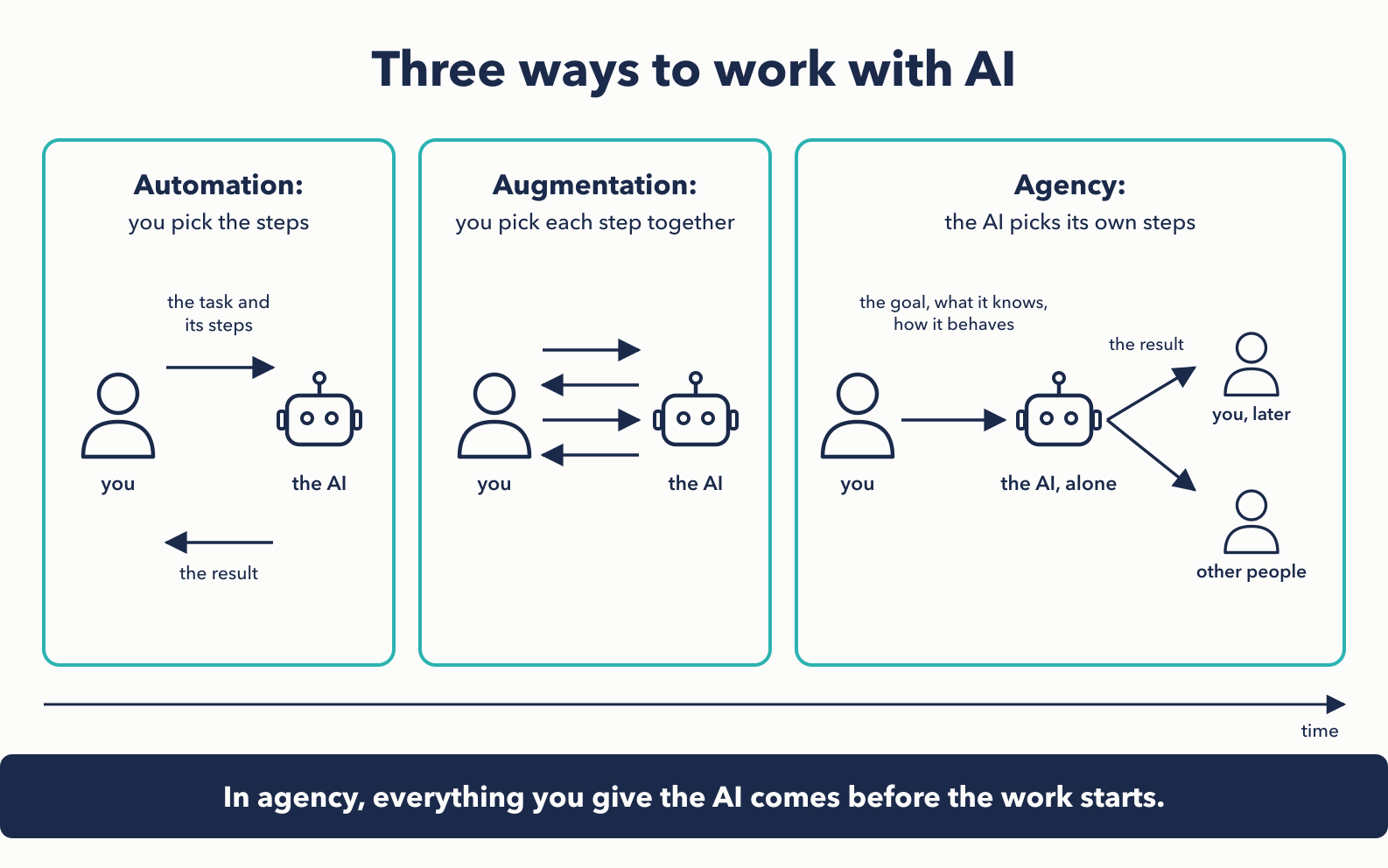
Figure 0.4.1. Who picks the next step in each mode, and whether you are there.
Modes and permissions
How do the modes fit the ladder of interaction?
The Preface sorts the ways people use AI into a ladder, from search engines and chatbots up to agents and AI Workers. Agency covers the top two rungs of that ladder of interaction: "Agents are delegated tasks. AI Workers are managed." A chat sits on the rung below, "Chatbots are prompted", where you use automation or augmentation. A task you hand to an agent is agency. So is a job that repeats, handed to an AI Worker, such as the monthly reconciliation. Chapter 1 teaches the ladder.
Does a mode decide what the AI may do?
No. A mode says how you work with the AI, and it grants no permission. What an AI Worker may do is decided one action at a time, as Chapter 7 shows. The monthly reconciliation runs in agency, and it may still change nothing at all. So agency does not mean permission to do anything.
Check yourself
Question 1 / 8
0 answered
You and the AI go back and forth on why one difference does not add up, and both shape the answer. Which mode is this?
Sources
- Owner
- Panaversity