9.6 Governing initiative you did not request
- Status
- stable
- Owner
- Panaversity
- Approved
- Panaversity ·
In everyday life. A house-sitter may notice a leak and text you. They may even buy a bucket. They may not hire a plumber to rebuild the bathroom.
What you will learn. How to set rules for the things a worker does that nobody asked for, so that what it starts on its own stays inside the authority you already gave it. You practice it in steps 6 and 7 of the lab.
Why it matters. Work that nobody asked for is easy to miss, because nobody expects it. Rules written in advance tell the worker where to stop, before it does something you cannot undo.
A brief, the written instructions for one task, sets the rules for work you asked for. Initiative is work nobody asked for, and any worker can take it, even a job that runs on a schedule. So it needs its own rules. Write them before the worker takes any initiative. Grade initiative on four steps, like a ladder.
- Notice. It reads what it can see and finds something: a conversation that has stopped, or an odd invoice.
- Suggest. It tells a named person what it noticed and what it could do.
- Draft. It prepares the work, such as a note, a reply or a list, in a place where nothing happens until a person acts.
- Act. It changes something outside itself: sends, moves, renames, deletes, pays.
These are the four rungs of Chapter 7's autonomy ladder, observe, recommend, draft and execute, for work nobody asked for.
The governing rule is short. Initiative may notice and suggest freely, within the sources it may read and to the people and channels you named. It may draft only into a drafts place. It may act only inside the Authority Envelope you already set for that action, exactly as if someone had asked. Initiative never widens authority.
The Authority Envelope is the written limit on what a worker may do, which you set in Chapter 7. In this chapter's story, a job renamed 212 scanned invoices in a shared folder. That was an act. Nobody had given the worker permission for that act on that folder, so its initiative should not have reached it. The connector, the worker's link to that folder, allowed the change. The envelope did not.
In Part IV of this book, DSoR, the Data System of Record, as specified, checks every act against the envelope. That works only if every governed act goes through DSoR. The worker must have no other way to write, such as a connector with its own write access.1
Five habits help you apply the rule.
- Default to read-only. By default, the worker can read but not change anything outside its drafts place. Writing comes from a request or a granted rule, never from a guess.
- Write the rules for each action. For each kind of act, choose one of four rules. Do it without asking. Do it if pre-approved, which means a person approved that kind of act in advance. Ask first. Or hand it to a person. Each company decides which acts always go to a person. At Brightline, the book's example company, changes to bank details and payments always go to a person.
- Design the unattended exit. A run that needs an approval when nobody is there stops, records why, and tells a named person. It never waits without telling anyone, and it never finds a way around the approval.
- Read what it did. A named person reads the run history on a set day.
- Keep a way to stop it. Know who can pause it, and set a limit on what it may cost to run.
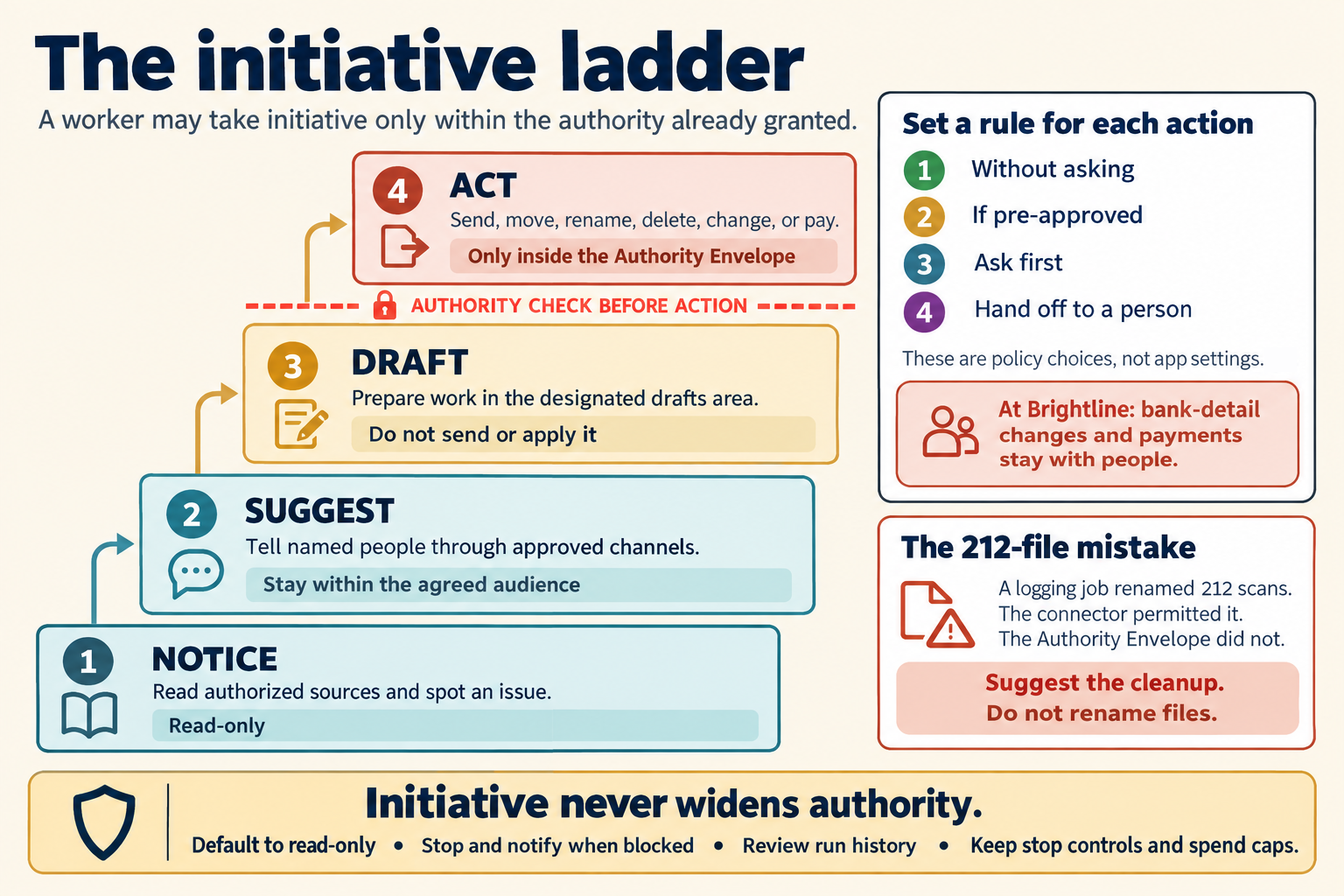
Figure 9.5. The initiative ladder. The red line marks the authority check before any act.
Check yourself
Question 1 / 8
0 answered
What are the four steps of the initiative ladder, in order?
Sources
9.5 Standing workers
What makes a standing worker different from one that does a task and stops, and the three things that change how you manage it.
9.7 Explaining value and limits to stakeholders
The six things to tell the people who rely on work that runs without you, the words to avoid, and how to state its limits.