4.3 Memory remembers
- Status
- stable
- Owner
- Panaversity
- Approved
- Panaversity ·
In everyday life. You remember a friend's old phone number. When the contact card says something different, the card wins.
Memory is the worker's continuity: preferences, experience and where to look. It is useful. A worker can remember that Maria wants the register sorted by due date, or that one vendor sends each invoice as two PDFs. That saves people from repeating themselves.
Memory has one hard limit: it is never authoritative. It never overrides KSoR, SSoR or DSoR. The precedence rule, which decides who wins, is short.1
- For knowledge, KSoR wins. If memory says the approval limit is $10,000 and the approved policy says $5,000, the answer is $5,000.
- For where a piece of work stands, SSoR wins. If the worker's own note says invoice 5120 was approved, and its case file shows it waiting for Dave's approval of the run, the case file wins.
- For current state, the company's systems win, read through DSoR. If memory says Lakeshore is Net 30 and the vendor record in the accounting system says Net 15, the answer is Net 15.
- Memory only says where to look. A good memory entry reads "Lakeshore's terms changed in August, so check the vendor record." A bad one reads "Lakeshore is Net 30."
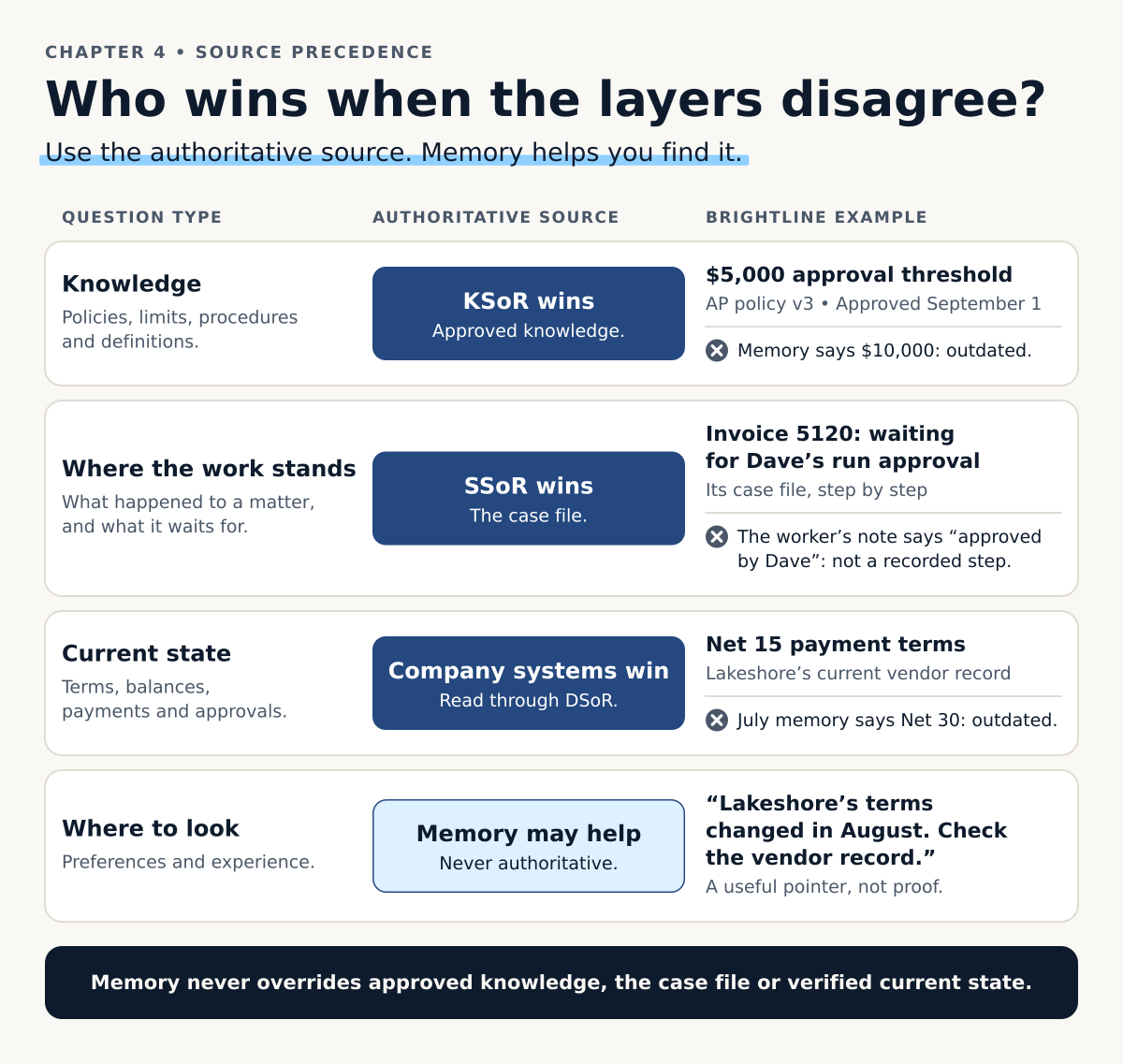
Figure 4.2. Who wins when the layers disagree. Memory decides nothing.
Monday's failure broke this rule. The remembered fact was true in July. Facts become stale (out of date), and memory has no owner, no approval and no version to warn anyone.2 So memory must never be the only source for a fact or permission the worker acts on. Approval limits, payment terms, bank details and approvals are checked against the governed source every time.
One test, the wipe test, checks whether memory is in its place. If the memory were wiped tonight, would tomorrow's work still be correct? The worker may be slower. It re-reads the record, or asks Maria again how she likes the register. But it must recover safely and never act on a guess. If wiping memory would make the worker wrong, something authoritative is stored in the wrong layer.
Chapter 8 explains in full how context, memory, SSoR, KSoR and DSoR differ.
Check yourself
Question 1 / 8
0 answered
Memory says Net 30. The vendor record says Net 15. What is the answer?
Sources
4.2 KSoR knows
The layer that holds what a company officially knows, kept as one approved record that people and workers both read.
4.4 SSoR tracks where the work stands
The layer that keeps one governed case file for each piece of work, so a worker reads where the work stands instead of guessing, and how it differs from memory and DSoR.